QuicK GeeK
Sunday, May 16, 2004
More Science
“The is a theory which states that if ever anyone discovers exactly what the Universe is for and why it is here, it will instantly disappear and be replaced by something even more bizarre and inexplicable.
There is another which states that this has already happened.” Douglass Adams
“The Restaurant at the End of the Universe”

Questions about the universe exist for centuries. Recent discoveries in quantum physics and in cosmology came up with a new way of how mind interacts with matter. These discoveries accept the idea that there is far more than just one universe and that we constantly interact with many of these “hidden” universes or so called “parallel universes”.
A parallel universe, as an encycopidian states, “is a hypothetical universe which exists separately from our own. Some theories of physics postulate the existence of many parallel universes, possibly even an infinite number. Depending on the details of the theory, these universes may or may not interact with each other.”
A lot has been writen on this matter. For instance, BBC wrote on parallel universes in 2002: Everything you're about to read here seems impossible and insane, beyond science fiction. Yet it's all true …
Or Scientific American in 2003: Parallel Universes. Not just a staple of science fiction, other universes are a direct implication of cosmological observations …
And now there is even more interesting article in a monthly science magazine Allsci. This article is about an Oxford physicist who has designed a home test for parallel universes. One can try to do such test by using a pin, a red laser pointer, a piece of paper, and a relatively dark room. The physicist, David Deutsch claims that the results from this experiment confirm the existence of parallel universes :)!
Well, give it a try guys and you might see yourself in a parallel universe say as a great writer, scientist, spaceman … Who knows?! ;)
“The is a theory which states that if ever anyone discovers exactly what the Universe is for and why it is here, it will instantly disappear and be replaced by something even more bizarre and inexplicable.
There is another which states that this has already happened.” Douglass Adams
“The Restaurant at the End of the Universe”
Questions about the universe exist for centuries. Recent discoveries in quantum physics and in cosmology came up with a new way of how mind interacts with matter. These discoveries accept the idea that there is far more than just one universe and that we constantly interact with many of these “hidden” universes or so called “parallel universes”.
A parallel universe, as an encycopidian states, “is a hypothetical universe which exists separately from our own. Some theories of physics postulate the existence of many parallel universes, possibly even an infinite number. Depending on the details of the theory, these universes may or may not interact with each other.”
A lot has been writen on this matter. For instance, BBC wrote on parallel universes in 2002: Everything you're about to read here seems impossible and insane, beyond science fiction. Yet it's all true …
Or Scientific American in 2003: Parallel Universes. Not just a staple of science fiction, other universes are a direct implication of cosmological observations …
And now there is even more interesting article in a monthly science magazine Allsci. This article is about an Oxford physicist who has designed a home test for parallel universes. One can try to do such test by using a pin, a red laser pointer, a piece of paper, and a relatively dark room. The physicist, David Deutsch claims that the results from this experiment confirm the existence of parallel universes :)!
Well, give it a try guys and you might see yourself in a parallel universe say as a great writer, scientist, spaceman … Who knows?! ;)
Monday, May 03, 2004
"New teeth 'could soon be grown'" - the BBC reports that researchers at King's College, London are working on developing techniques for growing natural replacement teeth. Using recently developed techniques, stem cells can be programmed to develop into teeth, and then inserted into the gap in a patient's jaw. According to the BBC, the research has already been successfully performed on mice, and clinical trials on humans should begin within two years. This could mean the end of dentures, states BBC...
Secrets of the planet
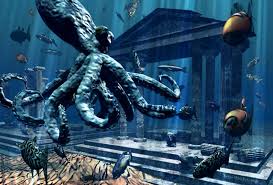
The legend of Atlantis is one of the oldest and most mesmerizing of all the world's mysteries. It has puzzled both skeptics and believers alike. Recently US researcher clam to have found the lost city, off the coast of Cyprus. Apparently, scientists have used sonar technology to detect the sunken landmass, and even identify geographical details. “California-based Robert Salmas says he has not only been able to pinpoint Atlantis to a sunken land mass off Cyprus's southern coast, but even discern its geographical features as described by Plato.”
The legend of Atlantis is one of the oldest and most mesmerizing of all the world's mysteries. It has puzzled both skeptics and believers alike. Recently US researcher clam to have found the lost city, off the coast of Cyprus. Apparently, scientists have used sonar technology to detect the sunken landmass, and even identify geographical details. “California-based Robert Salmas says he has not only been able to pinpoint Atlantis to a sunken land mass off Cyprus's southern coast, but even discern its geographical features as described by Plato.”
Friday, March 26, 2004
Space and us
Check this out: one of the Microsoft co-founder - Paul Allen pledged to donate $17.99 million for research into extra-terrestrial life. Moreover, he donated $25 million for developing The Allen Telescope Array, ATA.
The Allen Telescope Array will consist of 350 antennas of 6.1 meter diameter each manufactured by the makers of satellite dishes, resulting in an instrument with a collecting area exceeding that of a 100 m telescope.
A new telescope will be constructed that will allow a targeted SETI (Search for Extraterrestrial Intelligence) search to proceed 24 hours a day, 7 days a week.
Aliens - watch out! ;)
Check this out: one of the Microsoft co-founder - Paul Allen pledged to donate $17.99 million for research into extra-terrestrial life. Moreover, he donated $25 million for developing The Allen Telescope Array, ATA.
The Allen Telescope Array will consist of 350 antennas of 6.1 meter diameter each manufactured by the makers of satellite dishes, resulting in an instrument with a collecting area exceeding that of a 100 m telescope.
A new telescope will be constructed that will allow a targeted SETI (Search for Extraterrestrial Intelligence) search to proceed 24 hours a day, 7 days a week.
Aliens - watch out! ;)
Tuesday, March 16, 2004
Brian Stuff

How many times we have heard - the average person uses only 10-12% of their brain. We all get surprised with how low the figure is and move on with our 10-12% lives ;)
Well, apparently the "10% statement" is false! And yes, we use all of our brain, (that is the today’s scientific opinion, but it seems that it will stay this way for a while.) Here is one of many websites, which can give you many PhDs' opinions on this matter. Brain is an interesting; I would even say the most complex and unknown part of our body. It weighs less than 2.5% of our total bodyweight, but accounts for 20% of our energy consumption when we're at rest! It burns oxygen and glucose at ten times the rate of other body organs.
The early Greeks thought the brain was the home of your soul, rather than your intellect. They believed that thinking happened somewhere around the lungs! Not until the 17s and 18s centuries real brian was discovered.
Using new forms of technology, scientists have been able to look at how the brain performs when we undertake different tasks.
However, even though our brain sounds so complex and powerful we are not using it to its full capacity every minute. Just think about your PC – most of the time you working with it, PC uses no more than 15% of its capacity, for example working with “MSWord” or checking you email will probably use no more than 5% of the modern PC capacity, and when you are scanning your PC for virus and downloading 2 to 7 songs or movies from the internet and checking your email all at the same time you PC is under a BIG stress and it’s working at 100%.
Except for times of stress, no part of our body is working at 100% percent capacity. I don't believe that the brain is any different, although I do think that the 10% is very low for an everyday life.
However, if we were working at peak capacity all the time, how do we get better at anything?
And there are things about the two hemispheres and how they interact that we don't understand.
Sometimes damage to the left hemisphere can unleash surprising abilities in the right and, while these are typically seen in autistic children, they sometimes manifest in adults who have suffered cerebral trauma.
For us, average individuals it is not easy to reach states of mind that would allow us to perform at higher levels, but there are a lot of studies which can help to develop our abilities - an art teacher Betty Edwards has spent over two decades teaching supposedly untalented individuals to draw well by accessing "right-hemisphere mode".
And this is only one of the examples to improve your abilities. Website brain.com lists many simple ways of improving your memory and other functions of your brain.
Here are some websites on the “10% Myth”
http://faculty.washington.edu/chudler/tenper.html
http://www.snopes.com/science/stats/10percnt.htm
How many times we have heard - the average person uses only 10-12% of their brain. We all get surprised with how low the figure is and move on with our 10-12% lives ;)
Well, apparently the "10% statement" is false! And yes, we use all of our brain, (that is the today’s scientific opinion, but it seems that it will stay this way for a while.) Here is one of many websites, which can give you many PhDs' opinions on this matter. Brain is an interesting; I would even say the most complex and unknown part of our body. It weighs less than 2.5% of our total bodyweight, but accounts for 20% of our energy consumption when we're at rest! It burns oxygen and glucose at ten times the rate of other body organs.
The early Greeks thought the brain was the home of your soul, rather than your intellect. They believed that thinking happened somewhere around the lungs! Not until the 17s and 18s centuries real brian was discovered.
Using new forms of technology, scientists have been able to look at how the brain performs when we undertake different tasks.
However, even though our brain sounds so complex and powerful we are not using it to its full capacity every minute. Just think about your PC – most of the time you working with it, PC uses no more than 15% of its capacity, for example working with “MSWord” or checking you email will probably use no more than 5% of the modern PC capacity, and when you are scanning your PC for virus and downloading 2 to 7 songs or movies from the internet and checking your email all at the same time you PC is under a BIG stress and it’s working at 100%.
Except for times of stress, no part of our body is working at 100% percent capacity. I don't believe that the brain is any different, although I do think that the 10% is very low for an everyday life.
However, if we were working at peak capacity all the time, how do we get better at anything?
And there are things about the two hemispheres and how they interact that we don't understand.
Sometimes damage to the left hemisphere can unleash surprising abilities in the right and, while these are typically seen in autistic children, they sometimes manifest in adults who have suffered cerebral trauma.
For us, average individuals it is not easy to reach states of mind that would allow us to perform at higher levels, but there are a lot of studies which can help to develop our abilities - an art teacher Betty Edwards has spent over two decades teaching supposedly untalented individuals to draw well by accessing "right-hemisphere mode".
And this is only one of the examples to improve your abilities. Website brain.com lists many simple ways of improving your memory and other functions of your brain.
Here are some websites on the “10% Myth”
http://faculty.washington.edu/chudler/tenper.html
http://www.snopes.com/science/stats/10percnt.htm
Friday, March 05, 2004
Environment

Quite an interesting short story on BBC News about a three-headed frog, height="152">which kids spotted out in the garden. “The creature - which has six legs - has stunned BBC wildlife experts who warned it could be an early warning of environmental
problems.”
Quite an interesting short story on BBC News about a three-headed frog, height="152">which kids spotted out in the garden. “The creature - which has six legs - has stunned BBC wildlife experts who warned it could be an early warning of environmental
problems.”
Monday, March 01, 2004
Nature’s tricks
It is quite remarkable that any mother can find out gender of her future baby, while been only three month pregnant – our ancestors could only dream of such possibilities... but not insects, birds, fish and now some mammals :)
UK biologists claim they have conclusive proof that zebras, bison and certain other mammals actively adjust the sex of their offspring, reports New Scientist.
Apparently, many insects, birds and fish are capable of influencing the sex of their offspring, and now mammals have a fair reason to join this category.
Again, we have something to learn from the Animal Kingdom …
UK biologists claim they have conclusive proof that zebras, bison and certain other mammals actively adjust the sex of their offspring, reports New Scientist.
Apparently, many insects, birds and fish are capable of influencing the sex of their offspring, and now mammals have a fair reason to join this category.
Again, we have something to learn from the Animal Kingdom …
Tuesday, February 24, 2004
booze news ...
How much do we really know about alcohol and its affects on us? BBC has an interesting website which might help to clear things up.
Start with a quiz which will quickly split truth from the myth. Check out an example from the quiz:
Myth 4 of 9:
After a couple of drinks people around you look more attractive
Is this statement true or false?
Responses in this quiz so far:
True (10311 votes) 71.7%
False (4066 votes) 28.3%
What scientists say:This statement is true. Scientists have found proof of the beer-goggle effect. Researchers found that men and women who have drunk a moderate amount of alcohol find the faces of the opposite sex 25% more attractive. With alcohol also lowering inhibitions, this generally results in increased sexual behaviour.That’s an interesting piece of information to know ;)
The site is quite fun, it talks of alcohol drink making, how our body takes it and what really happens in the end ;) ...
Start with a quiz which will quickly split truth from the myth. Check out an example from the quiz:
Myth 4 of 9:
After a couple of drinks people around you look more attractive
Is this statement true or false?
Responses in this quiz so far:
True (10311 votes) 71.7%
False (4066 votes) 28.3%
What scientists say:This statement is true. Scientists have found proof of the beer-goggle effect. Researchers found that men and women who have drunk a moderate amount of alcohol find the faces of the opposite sex 25% more attractive. With alcohol also lowering inhibitions, this generally results in increased sexual behaviour.That’s an interesting piece of information to know ;)
The site is quite fun, it talks of alcohol drink making, how our body takes it and what really happens in the end ;) ...
Monday, February 23, 2004
New generation PC
Since Doug Engelbart’s demonstration of a word processor in 1968, computers quite quickly became a integral part of our lives. However pre-history of the computer goes all way back to the fourth century B.C. to the Babylonia (now Iraq), to the abacus, a simple counting aid.
In 60th one computer needed at list two rooms and over 20 people to serves them; and now we have a tiny machines as big as a note book doing 100 times more and 100 times faster then their big old ancestors...
So what's next?
Maybe this -> a computer called P-ISM. (The name does not really work for the adds but the thing does look cool... )

Here is the concept: five different pens make a computer. One pen is a CPU, another is a camera, third creates a virtual keyboard, another projects the visual output and displays and the fifth is a communicator (a phone).Each pen communicates wirelessly with the others. For more click here ...
In 60th one computer needed at list two rooms and over 20 people to serves them; and now we have a tiny machines as big as a note book doing 100 times more and 100 times faster then their big old ancestors...
So what's next?
Maybe this -> a computer called P-ISM. (The name does not really work for the adds but the thing does look cool... )
Here is the concept: five different pens make a computer. One pen is a CPU, another is a camera, third creates a virtual keyboard, another projects the visual output and displays and the fifth is a communicator (a phone).Each pen communicates wirelessly with the others. For more click here ...
Monday, February 02, 2004
Art and science
Leonardo da Vinci (1452-1519) - a true Renaissance man.

Many people in the last few centuries were trying to understand how his genius did really affect the world. Check out the website on Leonardo da Vinci
The Myth of the Renaissance in Europe opens the door into the secretes of the Renaissance time which will always be teasing enigma to the world...
Many people in the last few centuries were trying to understand how his genius did really affect the world. Check out the website on Leonardo da Vinci
The Myth of the Renaissance in Europe opens the door into the secretes of the Renaissance time which will always be teasing enigma to the world...
Wednesday, January 28, 2004
We often hear an expression: "Sleep on it..." And it might be just true according to the ScienceNews: "There's nothing like a good night's sleep to get some serious thinking done." Nature has something about sleep too ...
